If Oil Hits $200 a Barrel: How an Iran War Could Trigger Inflation and Higher Interest Rates in Canada
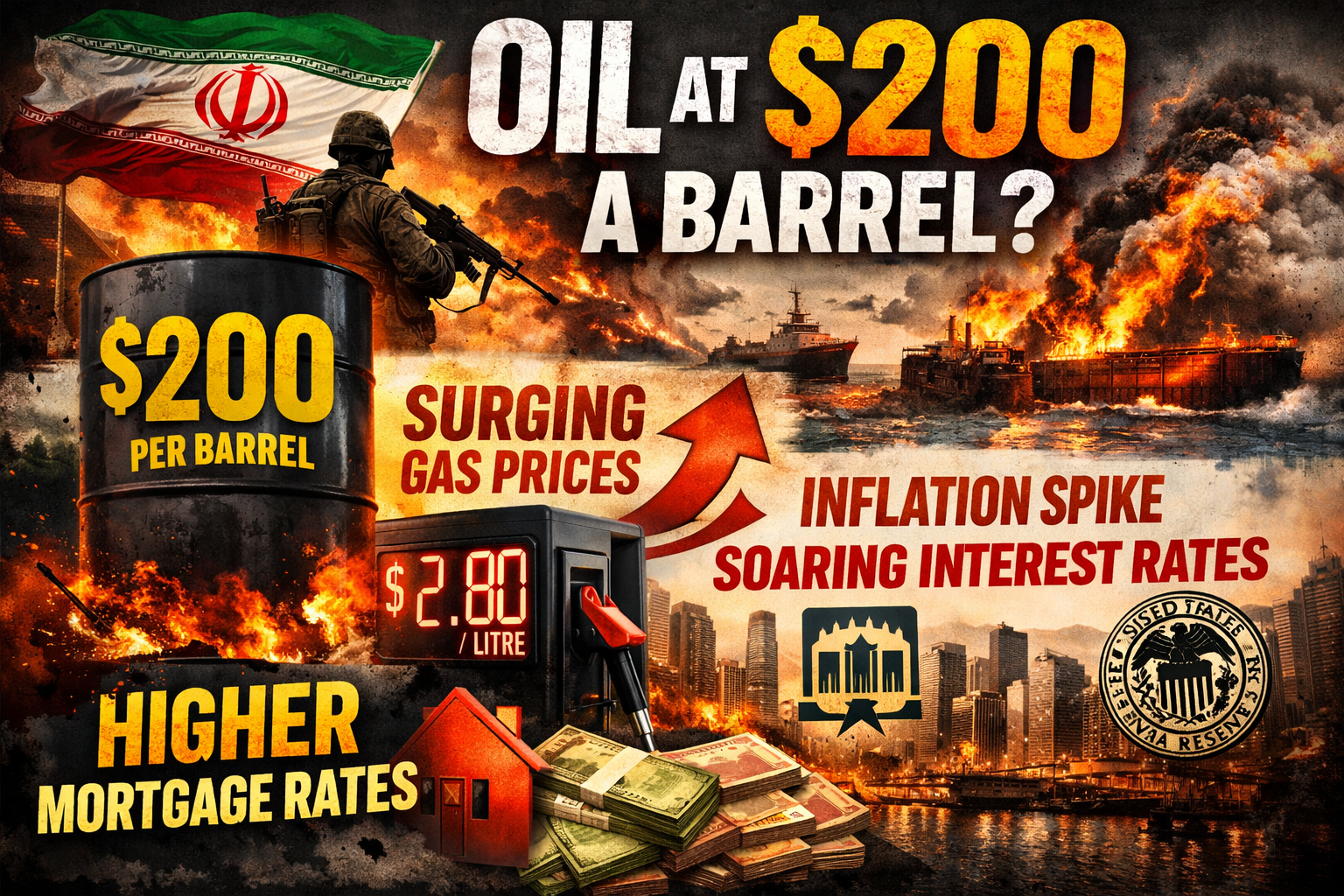
If Oil Hits $200 a Barrel: How an Iran War Could Trigger Inflation and Higher Interest Rates in Canada
As the Iran conflict enters day 12, leaders in Tehran have signaled that the country is prepared for a prolonged war if necessary. At the same time, Iranian officials have warned that global oil prices could reach levels the world has never seen before if tensions escalate further.
While no one can predict the future with certainty, geopolitical conflicts in the Middle East have historically had massive ripple effects on the global energy market.
So what happens if oil prices spike dramatically?
Let’s walk through a hypothetical scenario where oil reaches $200 per barrel—and how it could impact inflation, the Bank of Canada, the U.S. Federal Reserve, and mortgage rates in Canada.
Why the Iran Conflict Could Impact Global Oil Prices
The Middle East produces roughly one-third of the world’s oil supply, and critical shipping routes like the Strait of Hormuz handle about 20% of global oil transportation.
If tensions escalate or supply routes are disrupted, oil markets react quickly.
Potential triggers for a price spike include:
- Disruptions in Persian Gulf oil exports
- Sanctions tightening on major producers
- Damage to energy infrastructure
- Military escalation affecting shipping lanes
Even the risk of supply disruption can push oil prices sharply higher.
If markets begin pricing in a worst-case scenario, analysts believe oil could surge far beyond typical price ranges.
Hypothetical Scenario: Oil Reaches $200 Per Barrel
Let’s imagine a situation where oil prices jump from roughly $80–$90 per barrel to $200 due to supply disruptions and geopolitical escalation.
This would represent one of the largest energy shocks in modern history.
Here’s how the ripple effects could unfold.
1. Immediate Spike in Gasoline Prices
In Canada, gasoline prices are heavily tied to crude oil prices.
If oil reached $200 per barrel, gasoline could realistically climb to:
- $2.50 – $3.00 per litre in Ontario
- Higher in provinces with transportation costs
This would immediately impact household budgets and consumer spending.
2. Inflation Would Surge Again
Energy prices affect almost every part of the economy.
Higher oil prices increase costs for:
- Transportation
- Food production
- Manufacturing
- Logistics
- Airlines and travel
This would push Consumer Price Index (CPI) higher again after central banks have been trying to bring inflation down.
A $200 oil scenario could easily push inflation back above 5–7% in North America.
3. The Bank of Canada Could Pause Rate Cuts
The Bank of Canada has been carefully watching inflation trends before deciding on interest rate cuts.
If oil triggered a new wave of inflation, the Bank of Canada might:
- Delay any rate cuts
- Keep rates higher for longer
- Possibly even raise rates again if inflation accelerates
This would directly impact mortgage rates in Canada.
Fixed mortgage rates follow bond markets, and rising inflation expectations often push bond yields higher.
4. The U.S. Federal Reserve Could Tighten Policy
The Federal Reserve has a major influence on global financial markets.
If oil prices surged and inflation climbed again, the Fed could:
- Delay planned rate cuts
- Maintain high interest rates longer
- Signal further tightening if inflation resurges
Because Canada’s economy is closely tied to the United States, decisions by the Fed often influence the Bank of Canada’s policy direction.
5. Mortgage Rates Could Rise Again
Higher inflation expectations push bond yields higher, which directly impacts fixed mortgage rates.
In a $200 oil scenario, Canada could see:
- Rising bond yields
- Higher fixed mortgage rates
- Slower housing activity
For homebuyers and investors, borrowing costs could stay elevated longer than expected.
Would Canada Benefit From High Oil Prices?
Interestingly, Canada is also a major oil producer.
Higher oil prices can actually boost:
- Canadian energy sector profits
- Government tax revenues
- GDP growth in energy-producing provinces
However, for everyday consumers, the downside is higher inflation and higher borrowing costs.
This is why central banks must carefully balance economic growth with inflation control.
What This Could Mean for the Housing Market
For the housing market, a major oil shock could create mixed outcomes:
Possible negative effects:
- Higher mortgage rates
- Reduced affordability
- Slower home sales
Possible positive effects:
- Stronger Canadian dollar
- Higher wages in energy sectors
- Increased economic activity in certain regions
Overall, housing markets tend to react strongly to interest rate expectations, which makes inflation a critical factor.
The Bottom Line
While a $200 oil scenario remains hypothetical, geopolitical conflicts can move markets quickly.
If tensions escalate in the Middle East and energy supply becomes uncertain, the world could experience another wave of inflation pressure.
For Canada, that could mean:
- Higher gas prices
- Delayed interest rate cuts
- Rising mortgage rates
In uncertain times, staying informed about global economic trends is crucial—especially when they can influence everything from inflation to mortgage affordability.
Need help understanding how interest rates affect your mortgage options?
Whether you’re buying your first home, refinancing, or investing in property, understanding economic trends can help you make smarter financial decisions.
📞 Call or text: 437-961-0004
🌐 Website: www.garrysidhu.ca