$51 BILLION Announcement in Brampton — What It Means for Homebuyers in Ontario
H1: $51 BILLION Announcement in Brampton — What It Means for Homebuyers in Ontario
A major $51 billion infrastructure announcement in Brampton is making headlines across Ontario — and if you're planning to buy a home, refinance, or invest, this news could directly impact you.
Whether you're a first-time home buyer in Barrie, upgrading in Vaughan, or investing in Oshawa or Pickering, understanding what this means for mortgage approval, affordability, and home prices is critical in 2026.
Let’s break it down in simple terms 👇
📌 Featured Snippet (Quick Answer)
The $51 billion announcement in Brampton is part of a large infrastructure investment aimed at improving housing supply, transit, and community development. This type of spending typically increases demand, boosts property values, and can impact mortgage affordability and approval conditions across Ontario.
H2: What Is the $51 Billion Brampton Announcement?
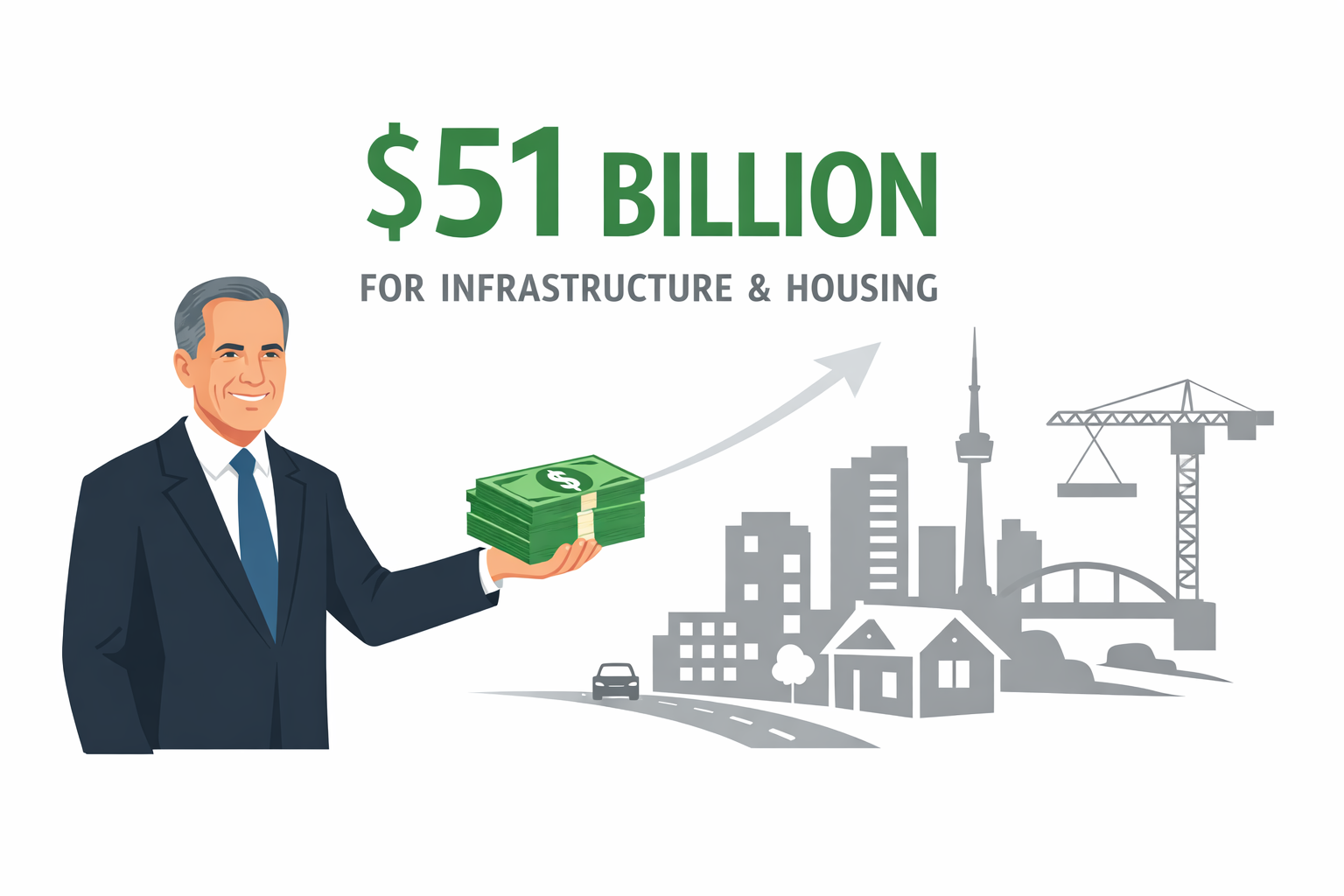
The federal government has committed $51 billion toward infrastructure and housing development, starting with key investments in cities like Brampton.
H3: What’s Included?
- New housing supply initiatives
- Transit and transportation upgrades
- Community infrastructure (centres, roads, utilities)
- Support for growing cities across the GTA and Ontario
👉 Translation: More development = more demand + more movement in the housing market
H2: How This Impacts Homebuyers in Ontario
H3: 1. Increased Housing Demand
When the government invests billions:
- Jobs increase
- Population grows
- Migration into cities rises
📈 Result: Higher demand for housing
Cities like:
- Brampton
- Vaughan
- Newmarket
- Aurora
…are expected to see stronger buyer activity.
H3: 2. Rising Property Prices
Infrastructure investment historically leads to:
- Higher property values
- Faster appreciation in growing regions
💡 Example:
If a home in Pickering is $800,000 today, improved transit + infrastructure could push it higher over the next few years.
H3: 3. Pressure on Affordability
As prices rise:
- Down payments increase
- Income requirements go up
- Mortgage stress test becomes harder to pass
👉 This is where many buyers struggle with mortgage affordability in Ontario
H2: What This Means for Mortgage Approval in 2026
H3: Key Mortgage Approval Factors
To get approved in Ontario, lenders look at:
- Income
- Debt levels
- Credit score
- Down payment
- Stress test qualification
H3: Example Scenario
Let’s say:
- Purchase price: $800,000
- Down payment: $80,000 (10%)
- Mortgage: $720,000
- Interest rate: ~5%
👉 Estimated income needed: $140K–$160K household income
Now imagine prices rise to $900,000:
👉 Required income jumps significantly
👉 Approval becomes harder
H2: Who Benefits the Most From This Announcement?
H3: 1. First-Time Home Buyers (Early Movers)
If you buy before prices surge, you benefit the most.
- Lower purchase price
- Lower down payment
- Easier mortgage approval
H3: 2. Homeowners (Equity Growth)
Existing homeowners may see:
- Increased home value
- Better refinance opportunities
👉 Example:
If your home value increases by $100K, you may access equity through a mortgage refinance in Ontario
H3: 3. Real Estate Investors
Investors benefit from:
- Rental demand increase
- Property appreciation
- Long-term growth
Especially in:
- Barrie
- Bradford
- Oshawa
H2: Mortgage Strategy — What Should You Do Right Now?
H3: 1. Get Pre-Approved Immediately
Before prices rise further:
- Lock in your borrowing power
- Understand your budget
- Move quickly when opportunity comes
H3: 2. Improve Your Credit Score
For better mortgage approval:
- Aim for 680+ credit score
- Pay down high-interest debt
- Avoid new credit inquiries
H3: 3. Plan Your Down Payment
Options in Canada:
- 5% for homes under $500K
- 10% for portion above $500K
- 20%+ avoids mortgage insurance
H3: 4. Understand the Mortgage Stress Test
You must qualify at:
- Your rate + 2%
OR - Minimum qualifying rate
👉 This is where many buyers fail — planning ahead is key.
H2: Pros and Cons of This Announcement for Buyers
✅ Pros
- More housing supply long-term
- Economic growth
- Job creation
- Stronger communities
❌ Cons
- Short-term price increases
- Increased competition
- Higher income needed for mortgage approval
- Affordability pressure
H2: Real-Life Example (Ontario Buyer)
Let’s compare:
Buyer A (Buys Today)
- Price: $750,000
- Down payment: $75,000
- Mortgage: $675,000
Buyer B (Waits 2 Years)
- Price: $900,000
- Down payment: $90,000
- Mortgage: $810,000
👉 Difference:
- $135,000 more mortgage
- Higher monthly payments
- Harder approval
💡 Lesson: Timing matters more than trying to “time the market” perfectly
H2: Is Now a Good Time to Buy in Ontario?
Short answer: It depends — but waiting has risks.
If:
- You have stable income
- Good credit score
- Manageable debt
👉 You may be better off entering the market before prices climb further.
H2: Local Impact Across Ontario Cities
📍 Brampton
- Immediate growth focus
- Infrastructure upgrades
📍 Vaughan & Newmarket
- Strong commuter demand
- Rising property values
📍 Barrie & Bradford
- Affordable alternatives to GTA
- High growth potential
📍 Pickering & Oshawa
- Transit expansion zones
- Investor hotspots
H2: Frequently Asked Questions
1. How does government spending affect housing prices?
It increases demand, boosts economic activity, and typically leads to higher property values over time.
2. What credit score is needed for mortgage approval in Canada?
Most lenders prefer 680+, but some options exist below that with higher rates.
3. How much income do I need to buy a home in Ontario?
It depends on price, but for an $800K home, typically $140K+ household income is required.
4. Is it better to buy now or wait?
Waiting can mean higher prices and stricter mortgage approval requirements.
5. Can I refinance if my home value increases?
Yes — you can access equity through a refinance mortgage in Ontario.
H2: Final Thoughts — What This Means for You
This $51 billion Brampton announcement is not just news — it’s a signal.
👉 Ontario is entering another growth phase
👉 Housing demand is likely to increase
👉 Affordability could tighten further
If you’re thinking about buying, refinancing, or investing — this is the time to get clarity on your options.
📞 Ready to Make a Move? Let’s Talk
If you want to understand:
✔️ How much you qualify for
✔️ The best mortgage rates in Ontario
✔️ Smart strategies to buy before prices rise
Reach out today 👇
Garry Sidhu
Mortgage Broker
🌐 www.garrysidhu.ca
📞 437-961-0004
👉 Let’s build your plan — whether you’re buying your first home or scaling your portfolio.